GDP
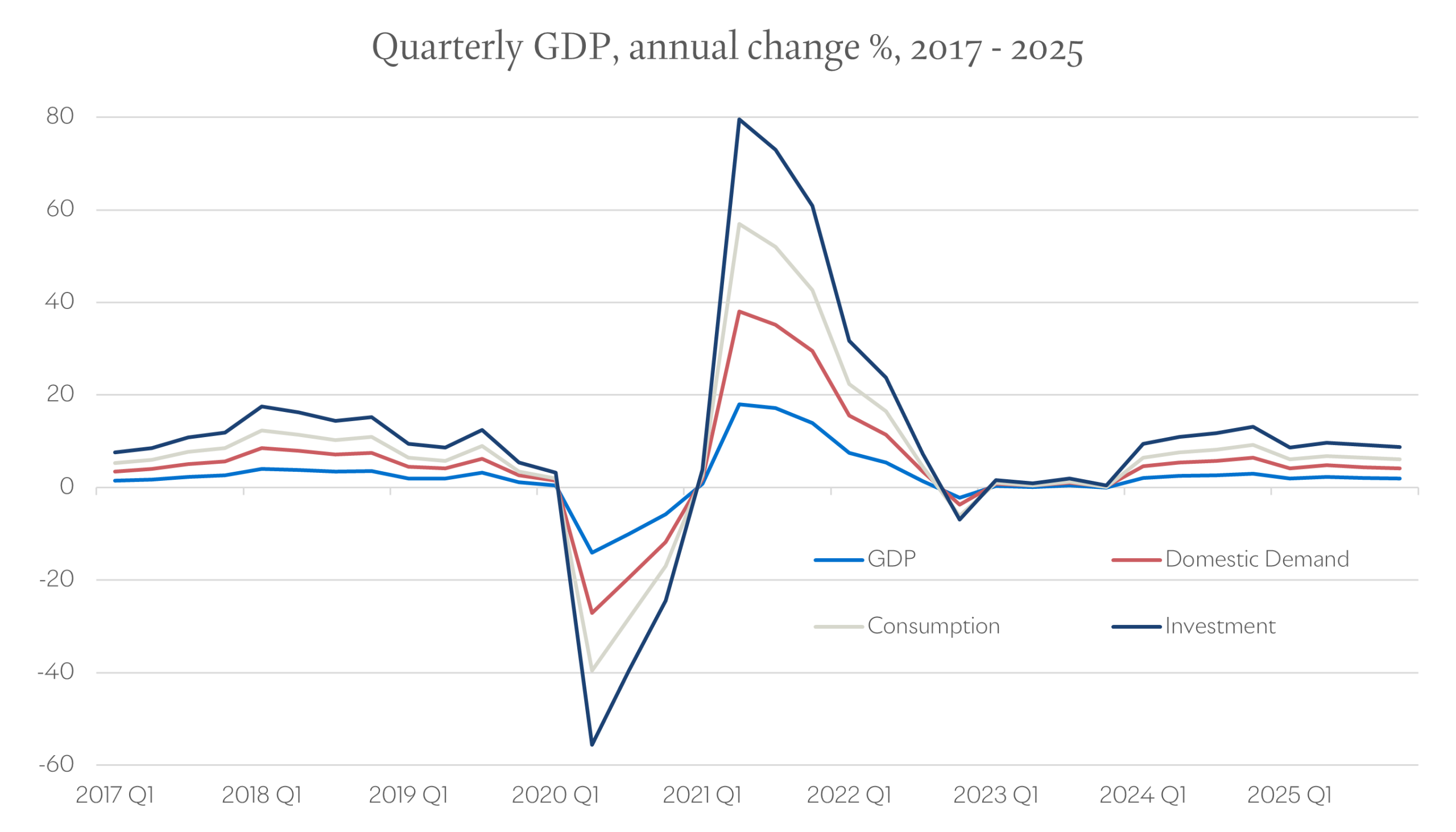
Chile’s annual growth rates have consistently been positive since the turn of the century, buoyed by high copper prices and internationally acclaimed economic policies. It dropped into negative territory during the global financial crisis during 2008 and 2009, and briefly after the huge earthquake in 2010. In 2020 it dropped again due to the double impact of the social crisis outbreak at the end of 2019 and the onset of COVID in March 2020. Also see GDP Growth actual and projected.
In recent years:
2022: real GDP grew by +2.0%.
2023: growth slowed to +0.2%, reflecting sluggish private investment and tight financial conditions.
2024: GDP rebounded to +2.6%, supported by rising exports and internal demand; this exceeded both the Central Bank’s forecast and the World Bank’s estimate.
Projections for 2025:
The IMF forecasts real GDP growth of +2.0%.
The World Bank expects a similar +2.1%.
The Central Bank’s Monetary Policy Report (May 2025) forecasts growth between 1.75% and 2.75%, citing stronger-than-expected start to the year.
The Monthly Economic Activity Index (Imacec)
The Imacec is an estimate that summarises the activity of the different branches of the economy in a given month, at prices from the previous year. The calculation of the Monthly Economic Activity Index is based on multiple supply indicators, which are weighted by the share of economic activities in the previous year’s GDP.
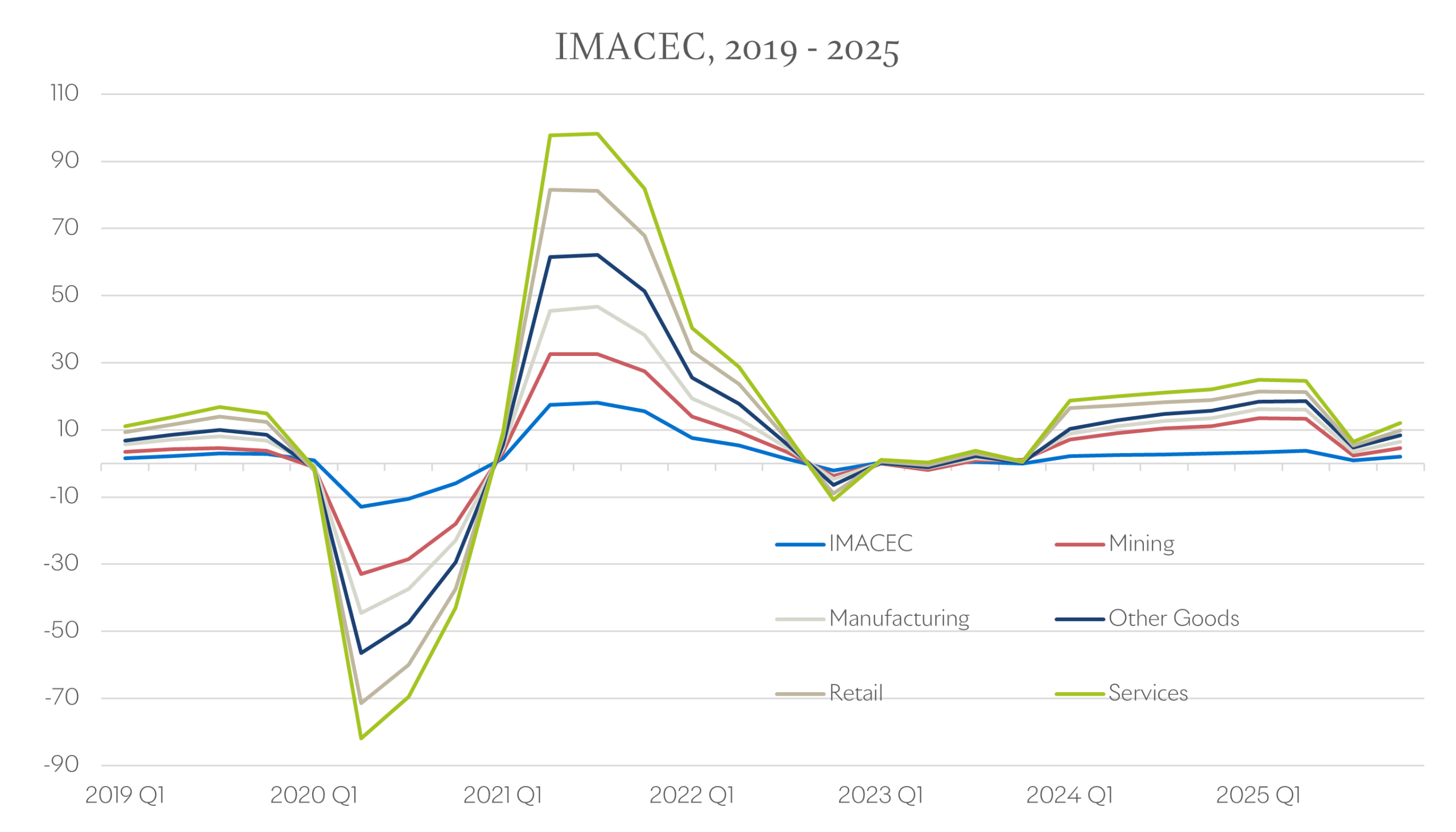
Source: Central Bank of Chile.
The Monthly Business Confidence Indicator
Which is produced by the Adolfo Ibáñez University and ICARE, slipped to 49.04 points in November 2021, moving back into negative territory for the first time in almost a year. Executives surveyed by the Central Bank in October 2021 found that while most of them had seen a significant improvement in sales this year, they were concerned by rising costs, labour shortages, and uncertainty relating to the evolving political situation.
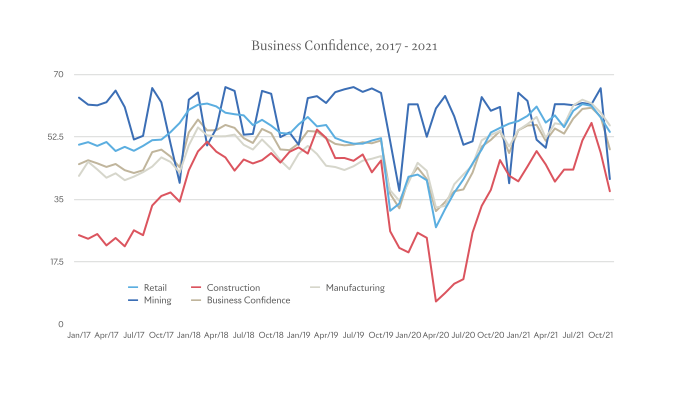
Source: Adolfo Ibáñez University, ICARE.
Inflation
The long-term aim of Chile’s independent Central Bank is to hold inflation at around 3%. Prior to the onset of COVID 19 this was largely achieved by careful fiscal management.
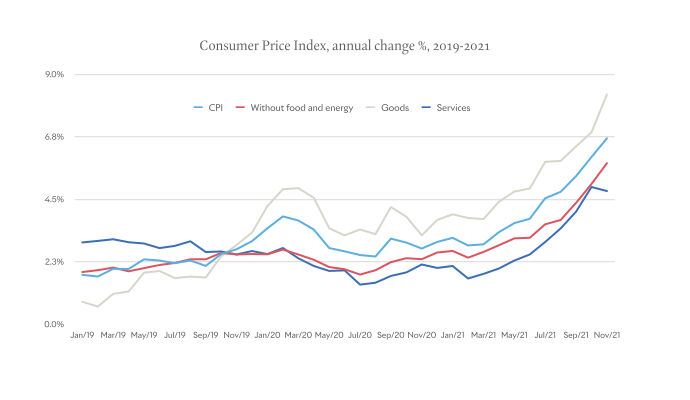
The consumer price index, used here as a proxy for inflation, demonstrates that the recent hike in inflation was driven by a surge in retail spending. This in turn was a consequence of the large injection of cash into the economy stemming from the government’s pension withdrawal scheme and other social support mechanisms. Also see here.