
BritCham aborda avances y oportunidades en mercados de carbono junto con el Ministerio del Medio Ambiente
mayo 5 ,2026


mayo 5 ,2026
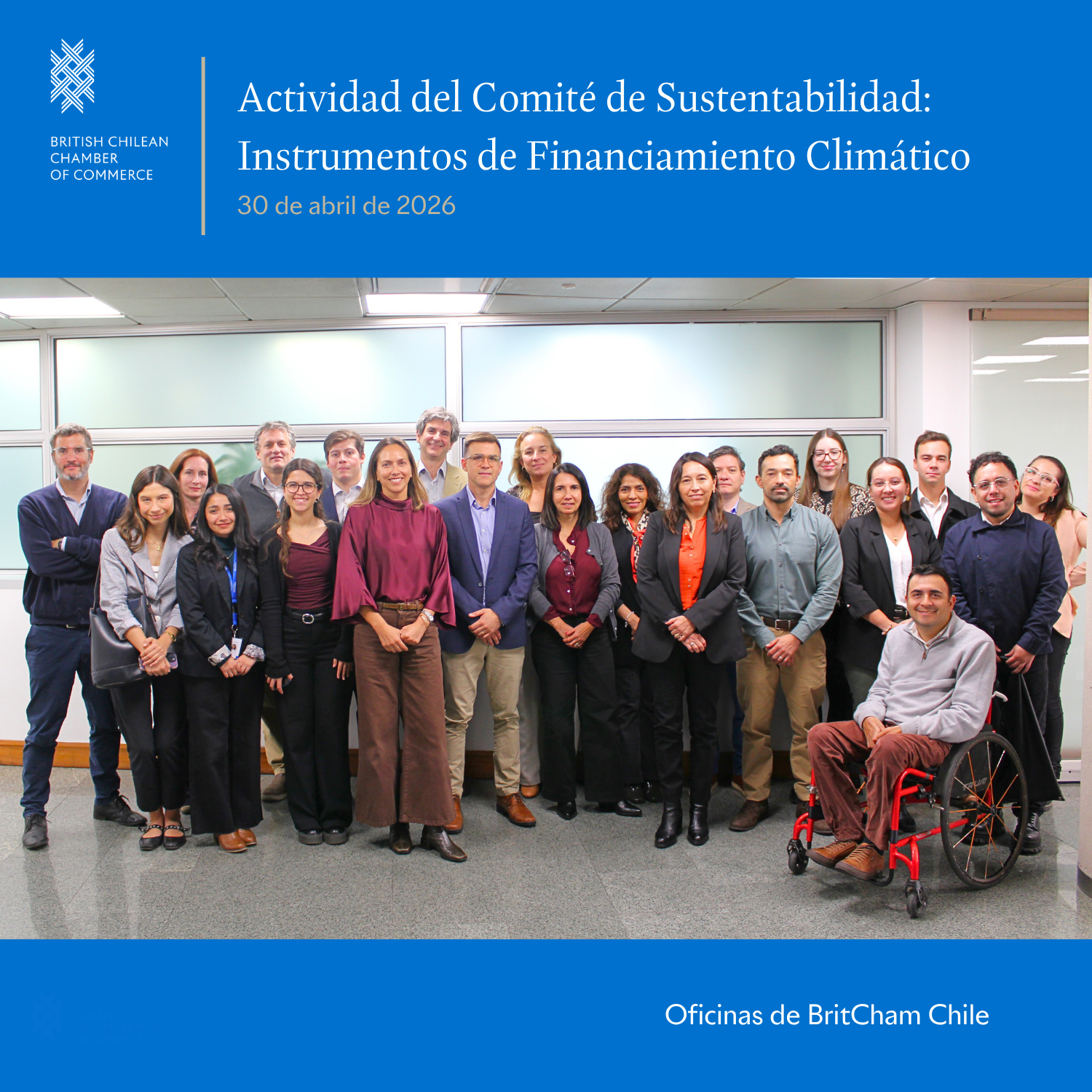
BritCham Chile, a través de su Comité de Sustentabilidad, realizó el pasado jueves una sesión centrada en la agenda de fomento de proyectos de mitigación de emisiones, con la participación de Jorge Gómez, Asesor Senior de Mercados de Carbono del Ministerio del Medio Ambiente. La instancia fue moderada por Laura Landeta, presidenta del Comité de Sustentabilidad de BritCham, quien lideró el diálogo entre el expositor y los asistentes.
Durante la presentación, se abordó el contexto de la triple crisis ambiental que enfrenta Chile y el mundo, junto con las metas climáticas del país, destacando la necesidad de impulsar proyectos de reducción de gases de efecto invernadero con co-beneficios ambientales y sociales. En este marco, se relevaron los avances en la implementación de instrumentos de precio al carbono, los cuales permiten la creación de mercados y la movilización de inversión, en un escenario donde cerca de un tercio de las emisiones globales ya se encuentran bajo estos mecanismos.
Asimismo, se presentó la hoja de ruta para habilitar la inversión en Chile, basada en el fortalecimiento del marco regulatorio —incluyendo la Ley Marco de Cambio Climático—, la articulación de instrumentos nacionales e internacionales y el impulso a la participación del sector privado en la acción climática.
La sesión también consideró la revisión de herramientas clave como el Sistema de Compensación de Emisiones (SCE), asociado al impuesto verde, que en 2024 permitió compensar un 20% de las emisiones afectas, reflejando su creciente relevancia. A nivel internacional, se destacaron los avances del Artículo 6 del Acuerdo de París, que abre nuevas oportunidades de inversión en proyectos de reducción de emisiones en áreas como biomasa, almacenamiento energético, electromovilidad y valorización de biogás.
Finalmente, se abordó la importancia de promover instrumentos innovadores como el blended finance, así como soluciones basadas en la naturaleza, que contribuyen a la restauración, preservación y uso sostenible de los ecosistemas. La jornada concluyó con un espacio de diálogo entre los asistentes, donde se reforzó la relevancia de la colaboración público-privada para acelerar la transición hacia una economía carbono neutral al año 2050.


