
Transporte Inteligente: Tecnología, Datos y Sostenibilidad para la Movilidad del Futuro
noviembre 5 ,2025


noviembre 5 ,2025
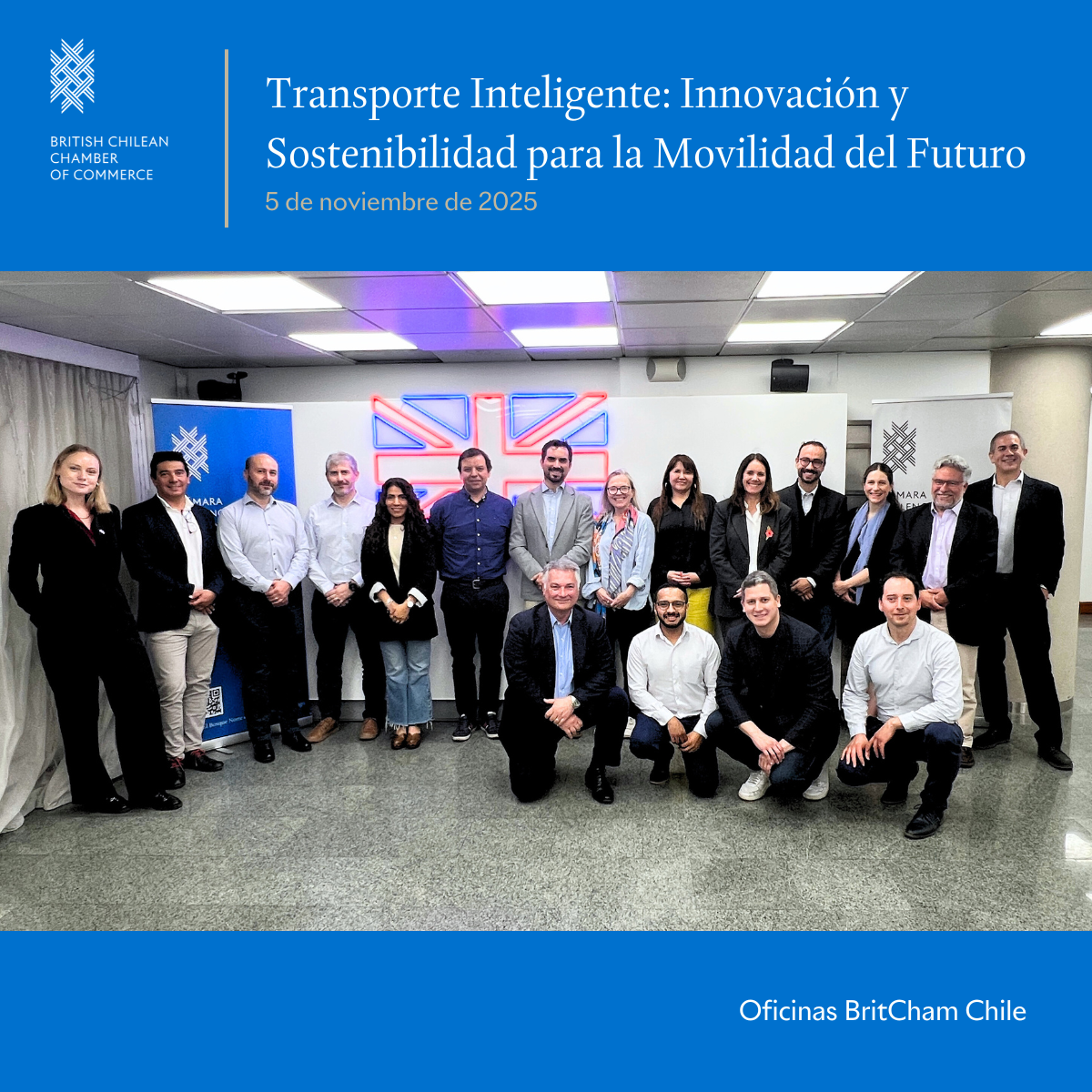
Santiago, 5 de noviembre de 2025 – La Cámara Chileno-Británica de Comercio (BritCham Chile), a través de su Comité de Tecnología, Innovación y Ciencias, realizó el conversatorio “Transporte Inteligente: Tecnología, Datos y Sostenibilidad para la Movilidad del Futuro”, instancia que reunió a representantes del sector público, privado y académico para analizar cómo la tecnología y el uso estratégico de los datos están transformando la movilidad urbana y la sostenibilidad del transporte en Chile.
Moderado por Joanna Pérez, presidenta del Comité de Tecnología, Innovación y Ciencias, el encuentro contó con la participación principal de Alejandro Schmidt, Chief Technology Officer del Ministerio de Transportes y Telecomunicaciones, quien abordó los avances, desafíos y oportunidades del ecosistema de transporte inteligente en el país.
Colaboración público-privada para la movilidad del futuro
Schmidt destacó la evolución del sistema chileno desde el Transantiago hasta el actual modelo de transporte metropolitano, hoy reconocido por su integración digital y enfoque ciudadano. Subrayó que la prioridad del Ministerio está en modernizar la infraestructura tecnológica, fortalecer la gobernanza de datos y fomentar la colaboración abierta con la industria y la academia para mejorar la experiencia de usuarios y operadores.
El experto enfatizó el liderazgo de Santiago en electromovilidad, con más de 3.800 buses eléctricos en operación, posicionando a la capital como una de las ciudades con mayor flota eléctrica del mundo fuera de China. Añadió que el desafío actual radica en asegurar la resiliencia energética y la capacidad de almacenamiento que sustenten esta transición hacia flotas 100 % cero emisiones para 2035.
Datos inteligentes y experiencia centrada en las personas
El diálogo profundizó en el rol de la telemetría, el ticketing inteligente y la analítica en tiempo real para mejorar la gestión operacional y la planificación. El Ministerio está impulsando licitaciones tecnológicas orientadas a la gestión de flota, la modernización del pago electrónico y la creación de una plataforma de datos abiertos que sirva como “sandbox” para startups y centros de investigación que deseen desarrollar soluciones innovadoras.
Schmidt enfatizó que la apertura de datos debe avanzar con resguardos de privacidad y marcos regulatorios claros, alineados con las mejores prácticas internacionales en materia de inteligencia artificial y protección de datos, como las desarrolladas en el Reino Unido.
Desafíos actuales y próximos pasos
Durante el conversatorio también se abordaron temas críticos como la evasión del pago del transporte, la interoperabilidad entre sistemas y el uso de nuevas tecnologías para la seguridad operacional. Schmidt explicó que los futuros contratos incorporarán sistemas de conteo de pasajeros, sensores telemétricos avanzados y estándares para el uso responsable de biometría facial, siempre bajo la normativa chilena de protección de datos personales.
Reiteró que el país avanza con paso firme hacia una movilidad sostenible, impulsada por la innovación tecnológica y el compromiso del sector público con un transporte más eficiente, seguro y accesible.