
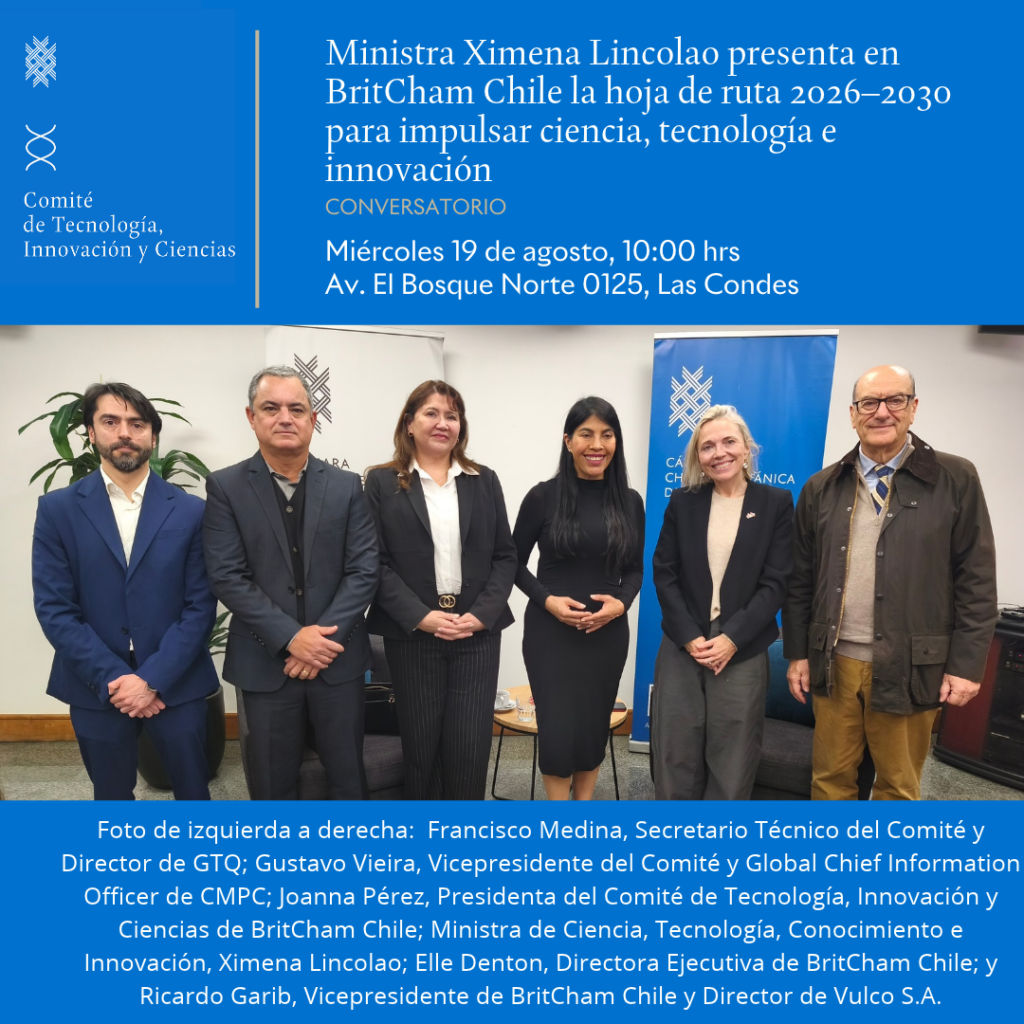
En un encuentro organizado por el Comité de Tecnología, Innovación y Ciencias de BritCham Chile, la Ministra de Ciencia, Tecnología, Conocimiento e Innovación abordó las prioridades del Gobierno para fortalecer la productividad y las capacidades tecnológicas del país, destacando la inteligencia artificial, la transferencia tecnológica, el desarrollo regional, el talento y la cooperación internacional. Asimismo, identificó oportunidades concretas de colaboración entre Chile y el Reino Unido en supercomputación, astronomía, investigación antártica y desarrollo tecnológico.
Santiago, 19 de agosto de 2026. Convertir las capacidades científicas y tecnológicas de Chile en productividad, innovación, nuevas empresas y oportunidades de desarrollo económico es uno de los principales objetivos de la hoja de ruta 2026–2030 del Ministerio de Ciencia, Tecnología, Conocimiento e Innovación.
Así lo señaló la Ministra de Ciencia, Tecnología, Conocimiento e Innovación, Ximena Lincolao, durante un conversatorio organizado por el Comité de Tecnología, Innovación y Ciencias de la Cámara Chileno-Británica de Comercio, BritCham Chile, instancia que reunió a representantes de empresas, academia y del ecosistema de innovación para analizar las prioridades del Gobierno y las oportunidades de cooperación entre Chile y el Reino Unido.
La conversación fue moderada por Joanna Pérez, Presidenta del Comité de Tecnología, Innovación y Ciencias de BritCham Chile, y abordó materias como inteligencia artificial, transferencia tecnológica, CERN, formación de capital humano, supercomputación, astronomía, desarrollo regional, emprendimiento, infraestructura científica y las oportunidades que ofrecen Magallanes y la Antártica para la cooperación internacional.
Seis pilares para ordenar las prioridades
Durante el encuentro, la Ministra explicó que la estrategia del Ministerio busca establecer prioridades claras y concentrar los recursos públicos en áreas donde exista tanto urgencia como oportunidades concretas para el país.
La hoja de ruta se estructura en torno a seis pilares: gestión; inteligencia artificial; transferencia tecnológica; motores de innovación regional; una política integral de ciencia, tecnología, conocimiento e innovación; y futuro del trabajo y talento.
La gestión constituye un componente especialmente relevante debido al peso que tiene el Ministerio en el financiamiento nacional de investigación y desarrollo y a la necesidad de mejorar procesos asociados a financiamiento, rendiciones y atención a universidades e instituciones beneficiarias.
“Los seis pilares organizan nuestro trabajo de una manera enfocada”, señaló la Ministra, enfatizando que el objetivo es determinar con claridad dónde existen oportunidades y dónde las necesidades del país exigen actuar con mayor urgencia.
CERN: de la investigación de frontera al valor agregado del cobre chileno
Uno de los ejes destacados fue la incorporación de Chile como Estado Miembro Asociado del CERN, que abre nuevas posibilidades para que investigadores, técnicos y estudiantes chilenos accedan a infraestructura científica de clase mundial y fortalezcan las capacidades nacionales en áreas como física y tecnologías cuánticas.
La Ministra destacó que esta vinculación no sólo tiene una dimensión científica. También puede generar oportunidades comerciales y de transferencia tecnológica para empresas chilenas.
En particular, explicó que Chile está evaluando la posibilidad de desarrollar una cadena de suministro de cobre libre de oxígeno (OFC) de alta pureza, material utilizado en infraestructura científica avanzada, aprovechando capacidades que ya existen en Valparaíso.
“Ahora estamos evaluando si nosotros podemos ser el proveedor de este cobre sin oxígeno y salir de todo este estancamiento que tenemos de solamente vender cobre procesado y no con valor agregado”, afirmó Lincolao.
El desafío, sostuvo, es que Chile pueda avanzar desde su posición como productor de recursos naturales hacia una economía capaz de desarrollar productos sofisticados, conocimiento y soluciones tecnológicas que puedan incorporarse a mercados internacionales.
El desafío de crear un verdadero ecosistema de innovación
Otro de los puntos centrales de la conversación fue la necesidad de fortalecer el ecosistema emprendedor y generar condiciones para que empresas innovadoras puedan crecer desde Chile.
La Ministra advirtió que el país cuenta con alrededor de 1,2 millones de microempresas unipersonales y señaló que la institucionalidad actual no permite distinguir adecuadamente entre una microempresa tradicional y una startup con potencial de escalamiento. A ello se suma aproximadamente otro millón de actividades empresariales que requieren avanzar hacia su formalización.
En este contexto, planteó la necesidad de construir una verdadera “musculatura de innovación”, que permita reconocer institucionalmente a las startups y generar instrumentos específicos de financiamiento, capital de riesgo y condiciones que faciliten su crecimiento.
“Es extremadamente importante que nosotros acá en Chile creemos un músculo de innovación, donde se defina el startup como tal, donde se creen recursos específicamente para el startup, no solamente financieros, sino habilitantes”, sostuvo.
La autoridad destacó que Chile dispone de ventajas significativas —entre ellas cobre, litio, recursos energéticos, capacidades astronómicas y acceso a la Antártica—, pero que el desafío es transformar esos activos en innovación, productividad y desarrollo económico.
Talento para los desafíos estratégicos del país
La formación de capital humano constituye otro componente fundamental de la hoja de ruta.
El Ministerio está fortaleciendo su programa de postdoctorado, que contempla 260 doctores recientemente graduados, con financiamiento durante tres años, orientando parte de las prioridades hacia áreas estratégicas como cambio climático, emergencias, minería y energía.
Lincolao defendió la necesidad de que la inversión pública en capital humano responda también a las capacidades que Chile requerirá en el futuro.
“Los gobiernos tienen la obligación y la responsabilidad de tomar medidas para que el país tenga esas capacidades”, señaló, destacando la necesidad de orientar intencionadamente parte del financiamiento hacia áreas estratégicas.
La Ministra recalcó, asimismo, que materias como inteligencia artificial y futuro del trabajo requieren una aproximación multidisciplinaria que integre ciencias, tecnología, humanidades y ciencias sociales, especialmente frente a desafíos relacionados con ética, reconversión laboral, educación y uso responsable de nuevas tecnologías.
Espacio, astronomía y supercomputación
Las capacidades astronómicas y espaciales de Chile también fueron identificadas como activos estratégicos.
Durante la conversación, la Ministra señaló que Chile cuenta actualmente con cinco satélites en operación y siete adicionales proyectados para lanzamiento, además de nuevos acuerdos en desarrollo, lo que abre oportunidades en investigación, observación y tecnologías espaciales.
A ello se suma la posición privilegiada del país en astronomía y la enorme cantidad de datos científicos generados desde los observatorios ubicados en el norte.
Según explicó Lincolao, estas capacidades convergen con otra ventaja competitiva: la disponibilidad de energía renovable. El norte de Chile y Magallanes podrían convertirse en emplazamientos estratégicos para infraestructura de supercomputación, Data Centres y campus de inteligencia artificial.
“Nosotros vemos una oportunidad tremenda en Magallanes y en el norte porque tenemos excedentes de energía sustentable renovable”, afirmó la Ministra.
La combinación de energía, infraestructura digital y datos científicos de alto valor podría posicionar a Chile como proveedor de capacidad de cómputo para instituciones y países que enfrentan restricciones de espacio, energía, agua o infraestructura.
Una oportunidad concreta para Chile y el Reino Unido
La Ministra dedicó una parte importante de su intervención a las posibilidades de profundizar la cooperación científica y tecnológica entre Chile y el Reino Unido.
Entre ellas destacó la posibilidad de desarrollar conjuntamente infraestructura de datos y supercomputación vinculada a astronomía, así como proyectos de investigación asociados a Magallanes y la Antártica.
En particular, mencionó el Centro Subantártico Cabo de Hornos, en Puerto Williams, cuya infraestructura presenta actualmente capacidad disponible y podría recibir científicos, universidades y proyectos internacionales.
“Invitamos al Reino Unido, invitamos a los emprendedores a hacer uso de eso; podemos hacer convenios, lo que se necesite”, sostuvo.
La cooperación antártica representa otra oportunidad. El Ministerio financiará este año una expedición científica utilizando el nuevo rompehielos de la Armada, embarcación con capacidad para transportar hasta 70 científicos.
“Esa es otra cosa que también ponemos a disposición en convenios: se pueden traer científicos, estudiantes, emprendedores”, indicó Lincolao, destacando además las capacidades del Instituto Antártico Chileno y la infraestructura disponible para investigación.
Empresas como aliadas del desarrollo científico y tecnológico
La Ministra subrayó durante el encuentro que el sector privado debe desempeñar un papel central en este proceso y destacó la necesidad de construir una relación permanente entre Gobierno, empresas, universidades y centros de investigación.
“Nosotros vemos a la empresa como un aliado. Si un país no tiene trabajo, no tiene desarrollo económico. Y la empresa tiene que tener una relación con el Gobierno saludable, de conversación”, afirmó.
En esta línea, invitó a BritCham Chile y a sus empresas socias a participar en iniciativas regionales junto al Ministerio para conocer directamente proyectos, centros de investigación, startups y desarrollos tecnológicos que puedan convertirse en oportunidades de colaboración, inversión, adquisición o testeo de nuevas soluciones.
BritCham Chile como plataforma para profundizar la cooperación bilateral
Al cierre del encuentro, Lincolao destacó especialmente la relación con la comunidad británica y manifestó la disposición del Ministerio para trabajar conjuntamente en nuevas iniciativas.
“La Cámara Británica es una Cámara extremadamente importante para nosotros como Gobierno. Tenemos los mismos intereses, los mismos valores”, afirmó la Ministra, reiterando la invitación a profundizar la cooperación y participar en las delegaciones que el Ministerio realice a distintas regiones del país.
El encuentro permitió identificar una agenda concreta de oportunidades para la colaboración público-privada y bilateral, desde la inteligencia artificial, la supercomputación y la transferencia tecnológica hasta la astronomía, el desarrollo regional, la formación de talento y la investigación antártica.
Para BritCham Chile, estos ámbitos representan una oportunidad para seguir fortaleciendo el puente entre Chile y el Reino Unido y conectar las capacidades científicas, tecnológicas y empresariales de ambos países con proyectos que contribuyan a una economía más innovadora, productiva y competitiva.
Galería de imágenes