Copper
Chile produces and exports copper cathodes and copper concentrates.
Estimated figures for the end of 2021 show that Chile’s total exports will amount to approximately US$95 billion. Of that total US$58 billion were minerals, and US$53 billion was copper. So copper accounts for over 50% of Chile’s total exports. In 2021 production amounted to approximately 5.6 million tonnes of the metal.
China leads the export destinations for Chile’s copper with US$29.9 billion, followed by the USA (US$6.7 billion), Japan (US$4.5 billion), South Korea (US$3.7 billion) and Brazil (US$2.2 billion).
Copper prices fluctuate with swings in supply and demand. The price of copper reached a near record high of US$4.8/ib in mid October 2021, as investors reacted to the global economic crisis and a squeeze on stocks, but had declined to US$4.30/lb by mid December 2021. Analysts are predicting that the price will average US$4.0/lb during 2022.
The Chilean Copper Commission’s (Cochilco) “Investment in Chilean Mining – Project Portfolio 2021-2030″, details investment projects for the next decade amounting to US$68,925 million through 51 separate initiatives. The lionshare of these (almost a third) are to be based in the Antofagasta Region, accounting for more that US$20,332 million.
Chilean copper mines are 72 percent owned and operated by private mining companies including: Anglo American, Antofagasta PLC, BHP and Callahuasi, among others. The remaining 28 percent is state-owned and operated by Codelco.
Between 2020 and 2024, Chile executed US$24 billion in major mining investment projects. More than half of this was led by the state-owned Codelco, pursuing multiple development initiatives. The remainder was driven by private firms: Antofagasta Minerals expanded Los Pelambres; BHP increased capacity at Minera Spence; and Collahuasi boosted output at Doña Inés de Collahuasi by about 170 000 tonnes per day. By 2025, these investments continue to underpin Chile’s leading role in global copper and mineral supply.
Lithium
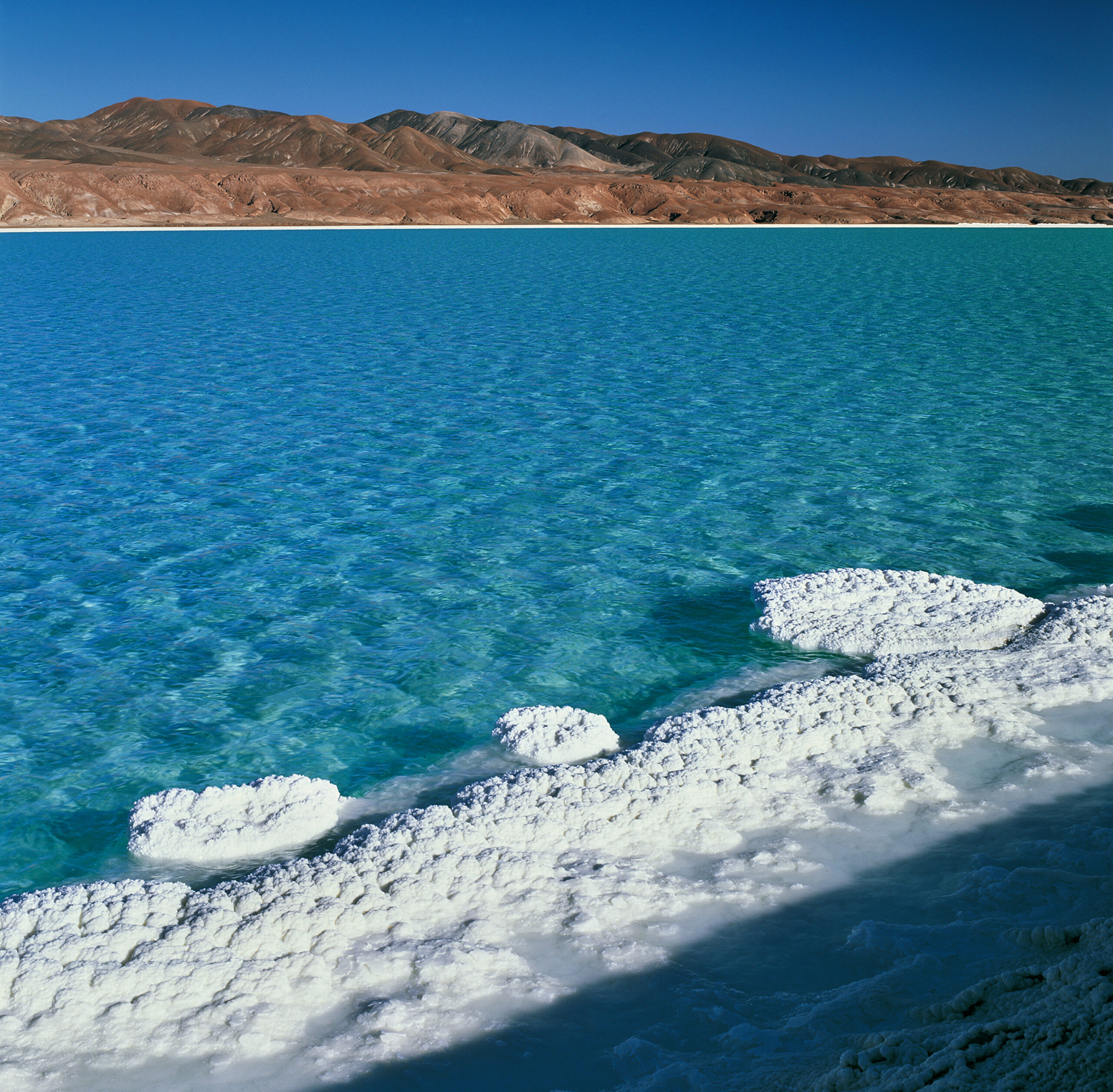
Chile’s huge lithium reserves lie mainly in salt flats in the north of the country, known locally as “salars”. Exploitation to date has largely come from the Salar de Atacama, and with a lesser contribution from the Salar de Maricunga.
In 2021 it is estimated that Chile produced an estimated 166 thousand tonnes of lithium carbonate with an export value of US$182 million, a year on year increase of 42%. This hike in price demonstrates the growing importance of lithium as a key component of battery technology used in electric vehicles.
In January 2022, Chile awarded quotas of approximately 80,000 tonnes of lithium to two companies: Chinese automaker ByD Co Ltd, and local firm Servicios y Operaciones Mineras del Norte, for a combined total of more than $US120 million. The new projects could potentially contribute as much as 100,000 tonnes of lithium carbonate, equivalent to the global market annually, increasing Chile’s production by 71% above 2021 forecast levels, according to S&P Global Market Intelligence.
Chile’s lithium deposits remain under the ownership of the state, but companies are issued concession licences to exploit the mineral. The main players are Albemarle and SQM.
Molybdenum
In Chile molybdenum oxide is a by-product of the copper mining industry. It is one of the most frequently traded metals in the markets. Chile currently lies in second place behind China as the main global producer of the mineral. The main destination markets in 2019 were Japan, South Korea, Netherlands, Brazil and the USA.
In 2021 Chile’s molybdenum exports reached US$2.0 billion, up 49.1% from 2020 driven by higher prices for the metal. Prices for molybdenum oxide averaged more than US$15/lb in 2021 up 76% from the average for 2020, offsetting a 14.4% drop in production to 42,063 tons.
Gold and Silver
There is evidence of gold being mined in Chile by indigenous peoples as far back as 700 B.C. It currently produces on average 40 tons per year, which puts it in 19 place globally. 56% of the total gold produced comes from dedicated mining sites, and the other 44% Is produced as a by-product of the copper mining process.
Chile produced 47.4 million ounces of silver in 2020, making it the fourth largest producer that year, behind Mexico, Peru and China. At the end of 2020 the value of silver was US$20.5 per ounce. As in the case of Gold, much of the silver produced in Chile is found as a by-product of the copper mining industry.
US$3 billion in investments were announced for gold and silver projects for 2020-2029 according to the Chilean Copper Commission (Cochilco).
Iron Ore
Chile produced 19 million tons of iron ore in 2021, which puts it in 13th place globally. The global market is dominated by Australia which produced 900 million tons of the ore in 2021. Chile’s iron ore exports were worth an estimated US$2.5 billion in 2021.
The dominant producer of iron ore in Chile is Compañía Minera del Pacifico (CMP) which makes up 84% of the business of the group CAP. CAP is the biggest surgical steel producer on the pacific coast of the Americas. CAP is also the third largest port operator in Chile.