4

Sector Reports

Section Four

Introduction Agriculture Clean Growth Education Financial Markets Infrastructure Life Sciences Mining Technology

The Chilean Mining Sector


INTRODUCTION      METAL BY METAL      OPPORTUNITIES        REFERENCES

Chile is the world’s largest producer of copper (28% share), and the second largest producer of lithium (22% share). It also produces significant quantities of Molybdenum, Gold, Silver and Iron Ore. Chile’s mining sector is, quite literally, the bedrock of its economy.

Mining’s direct contribution to GDP is 11% and when the copper price is good it has a further huge positive effect on the economy. The mining sector directly employs approximately 3% of the Chilean workforce. When global demand is high and the copper price forecasts are positive, mining attracts new inward investment, which currently accounts for around 25% of the national total.

At the beginning of 2022 the industry was focused on sustaining profitable operations in an increasingly complicated environment. Ore grades were dropping, and mines had to dig deeper or move underground to maintain production. Environmental standards had become increasingly demanding, and local communities were prepared to challenge both existing and proposed operations. Climate change had brought severe drought, particularly in the mining-intensive north, where sectors and communities were competing for scarce water resources. In the short term, there was political and economic uncertainty as the new government’s plans were unveiled and the country awaited proposals for a new constitution.

By 2025, Chile’s mining sector remains focused on sustaining profitability amid mounting operational and regulatory pressures. Ore grades continue to decline, forcing deeper extraction and greater reliance on underground mining. Environmental regulations are stricter, and communities are increasingly organised and willing to challenge new or existing projects. Climate-driven drought, particularly in the mining-intensive north, has intensified competition for water, accelerating the shift toward desalination and renewable energy. Although the constitutional process is now settled, the industry still faces regulatory adjustments, cost inflation and policy uncertainty. Despite this complexity, demand for copper and lithium keeps Chile central to the global energy-transition supply chain.

Metal by Metal


Copper

Chile produces and exports copper cathodes and copper concentrates.

Estimated figures for the end of 2021 show that Chile’s total exports will amount to approximately US$95 billion. Of that total US$58 billion were minerals, and US$53 billion was copper. So copper accounts for over 50% of Chile’s total exports. In 2021 production amounted to approximately 5.6 million tonnes of the metal.

China leads the export destinations for Chile’s copper with US$29.9 billion, followed by the USA (US$6.7 billion), Japan (US$4.5 billion), South Korea (US$3.7 billion) and Brazil (US$2.2 billion).

Copper prices fluctuate with swings in supply and demand. The price of copper reached a near record high of US$4.8/ib in mid October 2021, as investors reacted to the global economic crisis and a squeeze on stocks, but had declined to US$4.30/lb by mid December 2021. Analysts are predicting that the price will average US$4.0/lb during 2022.

The Chilean Copper Commission’s (Cochilco) “Investment in Chilean Mining – Project Portfolio 2021-2030″, details investment projects for the next decade amounting to US$68,925 million through 51 separate initiatives. The lionshare of these (almost a third) are to be based in the Antofagasta Region, accounting for more that US$20,332 million.

Chilean copper mines are 72 percent owned and operated by private mining companies including: Anglo American, Antofagasta PLC, BHP and Callahuasi, among others. The remaining 28 percent is state-owned and operated by Codelco.

Between 2020 and 2024, Chile executed US$24 billion in major mining investment projects. More than half of this was led by the state-owned Codelco, pursuing multiple development initiatives. The remainder was driven by private firms: Antofagasta Minerals expanded Los Pelambres; BHP increased capacity at Minera Spence; and Collahuasi boosted output at Doña Inés de Collahuasi by about 170 000 tonnes per day. By 2025, these investments continue to underpin Chile’s leading role in global copper and mineral supply.


Lithium

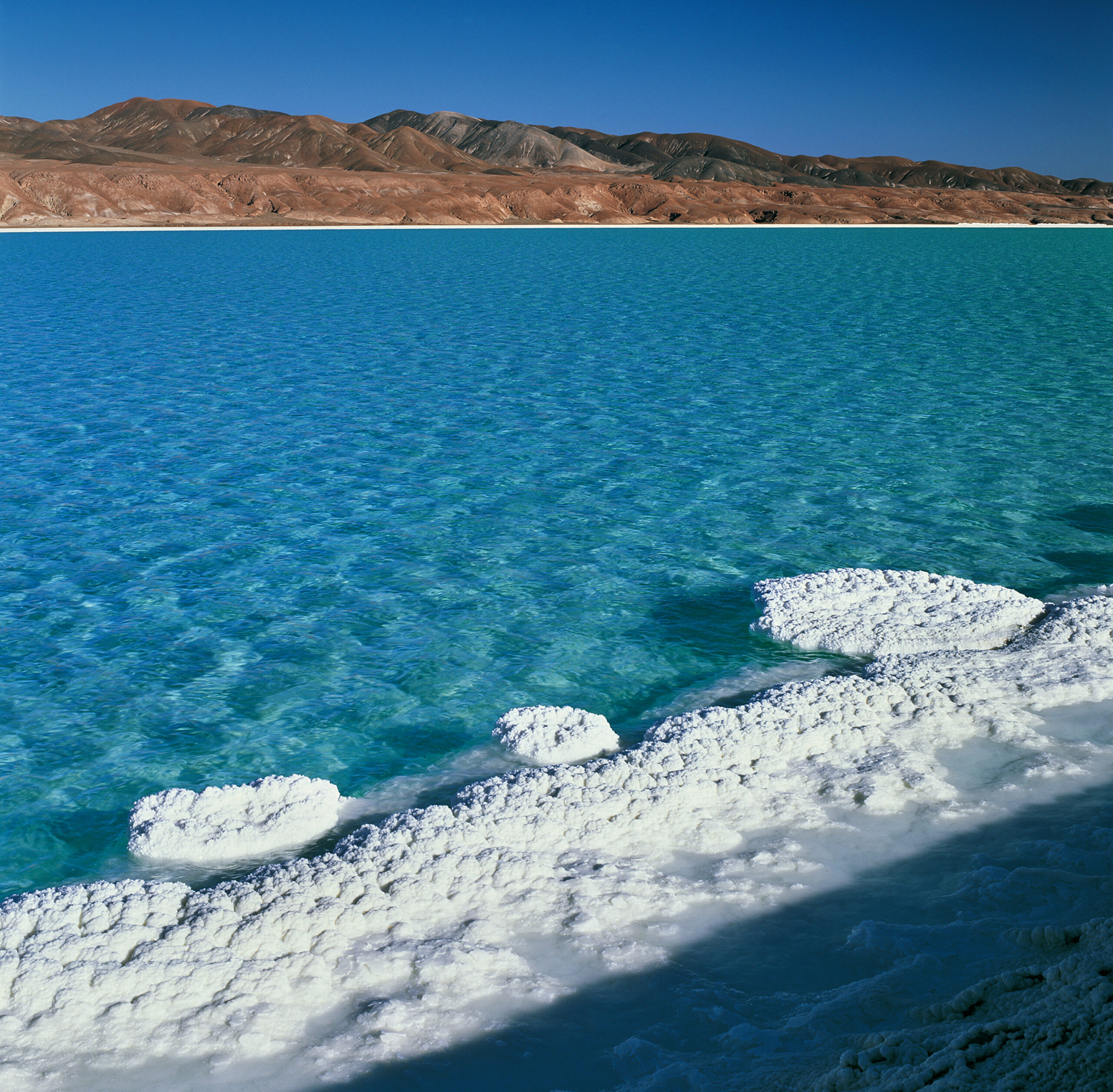
Chile’s huge lithium reserves lie mainly in salt flats in the north of the country, known locally as “salars”. Exploitation to date has largely come from the Salar de Atacama, and with a lesser contribution from the Salar de Maricunga.

In 2021 it is estimated that Chile produced an estimated 166 thousand tonnes of lithium carbonate with an export value of US$182 million, a year on year increase of 42%. This hike in price demonstrates the growing importance of lithium as a key component of battery technology used in electric vehicles.

In January 2022, Chile awarded quotas of approximately 80,000 tonnes of lithium to two companies: Chinese automaker ByD Co Ltd, and local firm Servicios y Operaciones Mineras del Norte, for a combined total of more than $US120 million. The new projects could potentially contribute as much as 100,000 tonnes of lithium carbonate, equivalent to the global market annually, increasing Chile’s production by 71% above 2021 forecast levels, according to S&P Global Market Intelligence.

Chile’s lithium deposits remain under the ownership of the state, but companies are issued concession licences to exploit the mineral. The main players are Albemarle and SQM.

Molybdenum

In Chile molybdenum oxide is a by-product of the copper mining industry. It is one of the most frequently traded metals in the markets. Chile currently lies in second place behind China as the main global producer of the mineral. The main destination markets in 2019 were Japan, South Korea, Netherlands, Brazil and the USA.

In 2021 Chile’s molybdenum exports reached US$2.0 billion, up 49.1% from 2020 driven by higher prices for the metal. Prices for molybdenum oxide averaged more than US$15/lb in 2021 up 76% from the average for 2020, offsetting a 14.4% drop in production to 42,063 tons.

Gold and Silver

There is evidence of gold being mined in Chile by indigenous peoples as far back as 700 B.C. It currently produces on average 40 tons per year, which puts it in 19 place globally. 56% of the total gold produced comes from dedicated mining sites, and the other 44% Is produced as a by-product of the copper mining process.

Chile produced 47.4 million ounces of silver in 2020, making it the fourth largest producer that year, behind Mexico, Peru and China. At the end of 2020 the value of silver was US$20.5 per ounce. As in the case of Gold, much of the silver produced in Chile is found as a by-product of the copper mining industry.

US$3 billion in investments were announced for gold and silver projects for 2020-2029 according to the Chilean Copper Commission (Cochilco).

Iron Ore

Chile produced 19 million tons of iron ore in 2021, which puts it in 13th place globally. The global market is dominated by Australia which produced 900 million tons of the ore in 2021. Chile’s iron ore exports were worth an estimated US$2.5 billion in 2021.

The dominant producer of iron ore in Chile is Compañía Minera del Pacifico (CMP) which makes up 84% of the business of the group CAP. CAP is the biggest surgical steel producer on the pacific coast of the Americas. CAP is also the third largest port operator in Chile.

Opportunities


Chile continues to fight recurring battles with water scarcity, rising energy costs and decreasing productivity. The mining sector is also under increasing pressure to assert and promote sustainability across the entire value chain. As a result significant investments are being made in R&D by equipment and service providers to address these challenges. For a complete view of the up and coming investment opportunities, see this guide by Invest Chile.

Environmental system solutions

Environmental technology such as improving water efficiency and energy efficiency have dramatically increased as the water/energy demand for mining also increases. For example, energy consumption is expected to increase by 13.3% by 2024. There has also been an increase in demand for reducing chemicals and biodegradable products as a reaction from social pressure. And there are numerous opportunities for investment in desalination projects, in which Chile is leading the way across Latin America.

Mining technology

Chile’s mining sector, including state-run giant Codelco, is finding ways to develop more modern and intelligent mining techniques to reduce its environmental footprint and there is a definite push towards automation and remote control through operations such as AI and robotics, BIM, big data, advanced analytics and cyber security. There is a trend favouring remote operation of grinding, crushing, and mineral concentration complexes and the sector is witnessing an increasing demand for autonomous trucks and smart equipment.

Optimization processes

Given that the richest deposits have already been mined, the industry is seeking more efficient ways to extract and process ores. This includes improving the flotation process, development of systems and the key stages in mining production. However, this must be done at the same time as reducing carbon emissions.

Promising sub-sectors include:

1. Off road transportation parts & equipment: bulldozers, scrappers, and trucks, 360º revolving excavators
2. Crushers, grinders and parts for rock cutters
3. Cranes and screening machines
4. Underground mining technology equipment and services
5. Desalination plants, equipment and parts, and monitoring technology
6. Air pollution abatement technology and services
7. Tailing pond monitoring technology and services
8. Carbon footprint reduction services and technology
9. Personal Safety Equipment

Ministry and Associations

Ministerio de Minería (Mining Ministry),
COCHILCO (Chilean Copper Commission),
Consejo Minero (trade association for large mining companies), SONAMI (Chilean mining society for companies of all sizes).
ENAMI – the National Mining Company aims to promote the development of small and medium scale mining. It provides the services required to access the refined metals market, under competitive conditions.
Expomin and Exponor – are important trade shows that alternate year on year between Santiago and Antofagasta.

References

US Department of Commerce (International Trade Administration), 2021

Invest Chile, Mining Industry in Chile Project & Opportunities in Chile, March 2021

OECD Economic Surveys Chile, 2021

Global Business Reports, Chile Mining 2021, 2021

S&P Global, Chilean mining sector expected to be undeterred by second wave of COVID-19, 2021

UK GOV, Mining is GREAT at Exponor in Chile, June 2015


IN PARTNERSHIP WITH


Download the
Mining Report

DOING BUSINESS IN CHILE GUIDE

Life Sciences

Technology

BACK TO TOP

Request access to download our reports

In compliance with GDPR regulations, please be aware that by downloading this report you acknowledge you are giving the British-Chilean Chamber of Commerce permission to keep your personal data for the delivery of this service and provide you with relevant information about international commerce.  If you do not wish for us to keep your personal data, please note you will be unable to take advantage of this service.

Request access